Jack ‘The Lighthouse’ Connell

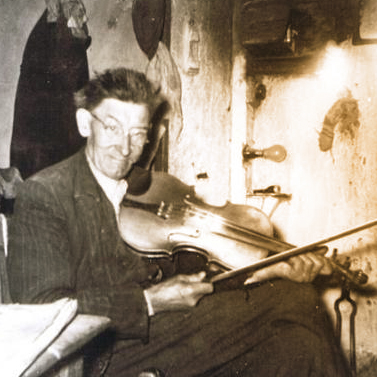
Jack Connell (1906-1994) took his nickname from his home in Meendurragh, just north of Ballydesmond, known locally as “The Lighthouse”. The village sits at a high point along the Cork/Tralee road, and in days gone by a lantern was indeed kept lit to direct carriages travelling by night. Jack was a celebrated fiddler, teacher, and tune-maker, taught by both Pádraig O’Keeffe and Tom Billy Murphy, as well as a certain “Mrs. Cronin” of Rathmore. His sister Nonie played the melodeon.

Apparently, Pádraig O’Keeffe once told him one should practice daily for 15 minutes, and Jack took it to heart; for nearly his whole life he played, whether at a dance or session or on his own at home. In the 30s and 40s he played for dances in the nearby Clamper dancehall. In later years he took on students and had a lasting influence on the local music community. Dan Herlihy was a pupil, and remembers Jack using O’Keeffe’s accordion tablature with which to teach him. O’Connell provided tunes to Breandán Breathnach who treasured his large and rare repertoire. Along with the usual dance tunes, he was known for his large store of waltzes. Interestingly, though he played and taught the Sliabh Luachra music of O’Keeffe and Murphy, his ideal musician was the legendary East Clare fiddler Paddy Canny. Anytime Canny was heard on the radio conversation with Jack would stop until the tune ran out. “The Lighthouse” is remembered as a good-humored, easy-going man and a patient and thoughtful teacher.

Learned from: Pádraig O’Keeffe, Tom Billy Murphy
Taught: Dan Herlihy

jack-oconnell-and-wife-mary
Jack with his wife Mary

Tim “Thadelo” O’Sullivan

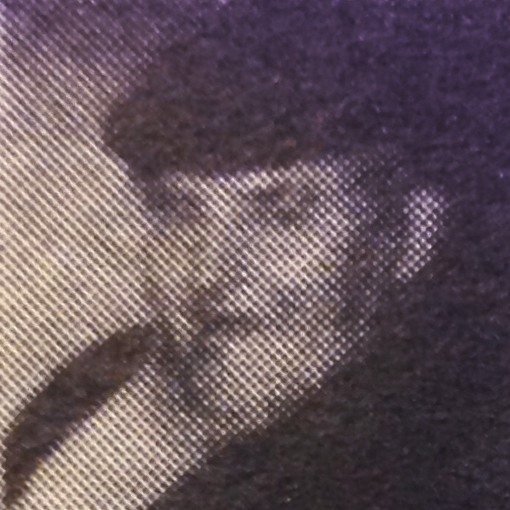
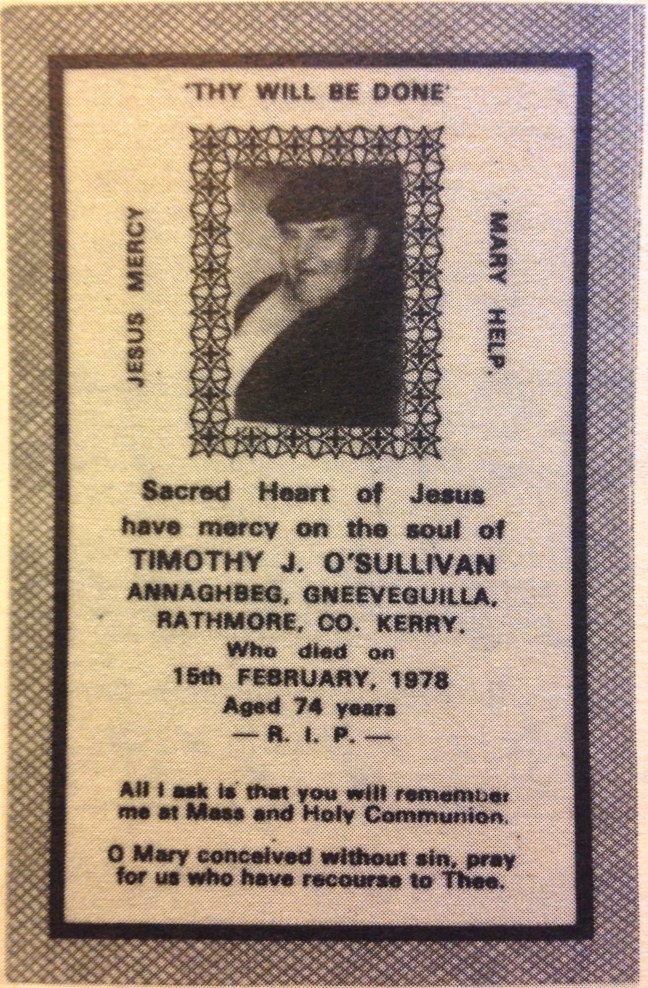
Tim “Thadelo” O’Sullivan (1904-1978) was a neighbor, musical mentor, and friend of Johnny O’Leary’s in Annaghbeg, Gneeveguilla. He was probably a pupil of Tom Billy Murphy. Thadelo played the concertina and one-row melodeon, as well as the flute and whistle. In Johnny’s memory he was a very popular musician for dancers. He taught Johnny a great number of tunes which seem to have unique to his repertoire, apparently not played by Tom Billy’s other students. Thadelo’s tunes tend have a signature feel to them: hornpipey polkas, barndancey hornpipes—very squared-off, old-fashioned-sounding tunes.

Learned from: Tom Billy Murphy
Played with: Johnny O’Leary

tim-thadelo-osullivan-funeral-card
Thadelo’s funeral card

Dan O’Leary

Dan O’Leary (1914-1981) was the uncle of Johnny O’Leary and likely got Johnny started with the music. Described as “a gentle, courtly, diffident, a soft-voiced man of slender frame and twinkling smile”, he was one of many accomplished but relatively unsung talents of Sliabh Luachra. In his youth it seems he got his music from Tom Billy as well as other more local influences. In 1977 he recorded “Traditional Music from the Kingdom of Kerry” with his Maulykeavane neighbor and longtime musical partner Jimmy Doyle. In the liner notes to that LP he recalls playing in his own home, for his own solitary pleasure, every night of the week. (“It takes away your worries, you know, you forget —-“) He’d hear a tune on the radio and play along with it and in two or three days he’d “have it.”

Learned from: Tom Billy Murphy

Taught: Johnny O’Leary

Played with: Jimmy Doyle

Recording:

jimmy doyle and dan oleary 300

dan-oleary

John Linehan

John Linehan (sometimes spelled Lenihan) (1860-1932) was a fiddle teacher of the generation before Pádraig O’Keeffe and Tom Billy Murphy. He was himself a pupil of Corney Drew, although it’s difficult to find any commonality between what little we know of either of their repertoires. He lived in Glounreigh (also spelled Glenreagh or Glounreagh), Co. Cork and is buried in Kiskeam cemetery. His students included fiddlers Sean B. O’Leary and Johnny O’Leary of Kiskeam as well as Maurice O’Keeffe. He would teach out of his home as well as traveling to students’ homes. Sean B. O’Leary described him as “a dignified, serious music teacher, who took pride in his tuition and musical performance.” Whereas Tom Billy and Pádraig had reputations as easygoing and mellow-tempered teachers, Linehan seems to have taken a disciplinarian approach. If a student played out of tune or diverged from the written music, Linehan would berate him, “Where are your ears, you demon? I’ll skin you!”

Maurice O’Keeffe said that he was the last pupil of John Lenihan, who was about 75 years old when Maurice was ten. He lived within easy walking distance. Maurice was “taught the music with scales, lines and spaces at eight pence a tune”. Lenihan could not play himself at that time because his fingers had gone stiff, but though he was near the end of his days, he seems to have lost none of his strictness. O’Keeffe recalled, “As a music master he was very strict and would not accept any sloppy work or half measures. On one particular occasion when I was supposed to visit him I was so afraid that I decided to ‘mitch’. I hid in the glen and when my mother enquired if I had a new tune I told her that I did not because I had not the previous one learnt ‘by heart’. By some chance my secret leaked and Mr. Linehan informed my mother. His message to her read ‘Tell that “barrow fellow” attend me tomorrow!’ My mother escorted me and I never missed another session.”

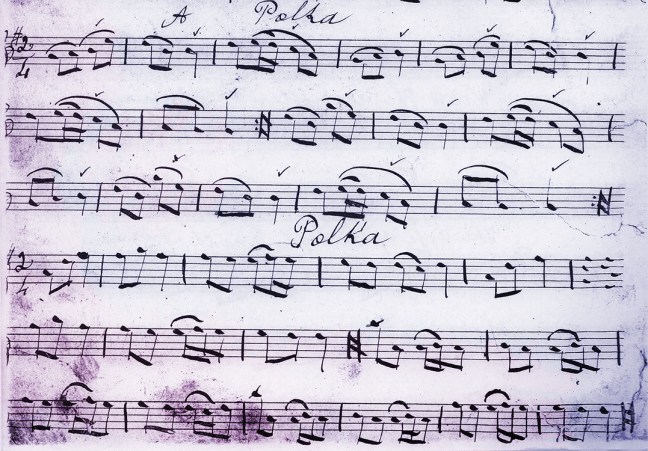
Dan Herlihy’s book Sliabh Luachra Music Masters contains 42 of his manuscript tunes which date from around 1910. Looking through these tunes gives an interesting glimpse of the music that was played in Sliabh Luachra at that time. There are some polkas and slides, but also a number of tunes that seem to be direct from the Scottish tradition. It also contains around eight nationalistic song airs, perhaps reflecting their popularity in a revolutionary period, and supporting the contention that such songs were beginning to supplant traditional airs. His polkas are interesting in their stage of folk processing. They are two part dance tunes but lack the characteristic house dance ‘swing’ found in the Din Tarrant settings. However, these were teaching manuscripts for his students and do not necessarily represent the way the man himself would have chosen to play them.

Examples of Linehan’s manuscripts:

65rgb63rgb

Cal O’Callaghan

Callaghan O’Callaghan (b.1863, d.?) lived in Doonasleen (commonly called Doon), County Cork. He had been a pupil of Corney Drew, and was a highly-regarded fiddler who played for local house parties and dances. As a young man, Cal had emigrated to Ohio and lived there for about 20 years. It’s thought that when he returned sometime in the 1880s he may have brought some American fiddle style and repertoire with him, and that some of these made their way into the Sliabh Luachra tradition. The entire Callaghan family played music, including his sister, Margaret, who married John O’Keeffe in 1887 and soon had her first child, Pádraig O’Keeffe. When Pádraig was young, he was sent to stay with his Callaghan relatives in Doon, a common custom at the time known as “fosterage” (“altramas” in Irish). This was a formative period for Pádraig , surrounded by a loving and entertaining family, in contrast to his domineering father, in a house where dances and parties were frequent. It was there that he received his first musical tutelage from his aunts and uncles, particularly Cal. The many “Doon” and “Callaghan’s” tunes are a testament to his influence.

Learned from: Corney Drew

TaughtPadraig O’Keeffe

Callaghan household census 1911
The Callaghan household in the 1911 census

Some of the many Callaghan’s and Doon tunes.

Paul De Grae has written an interesting rumination on the influence Cal’s stay in Ohio may have had on the Sliabh Luachra tradition.

Din Tarrant

Denis “Din” Tarrant (1871-1957) was fiddle player (who made his living as a travelling carpenter) from Ballydesmond and a contemporary of Pádraig O’Keeffe and Tom Billy Murphy. It seems he got his music from Taidhgín an Asail (who was also Tom Billy’s teacher), but he may have had a few tunes directly from the great Corney Drew as well. He was Denis Doody’s maternal grandfather and namesake, and Denis used to say that one of his earliest memories was hearing Din and Pádraig playing together in the Tarrant home late into the night. Johnny O’Leary remembers Din, Pádraig, and Tom Billy playing together at Jack Keeffe’s Bar in Knocknagree.

Din Tarrant spent some time in London where he had a lasting influence. He was reported to have played at a number of Gaelic League events between 1898 and 1901. It’s quite possible he was responsible for introducing a number of Cork/Kerry polkas which became a part of the old London dancehall repertoire. Two nephews, Richie and Paddy Tarrant, were stalwarts of the vibrant London Irish scene in the 60s.

It’s a shame that Tarrant was never sought out by the tune collectors and radio broadcasters that brought fame to Pádraig O’Keeffe. No doubt his music had its own unique qualities that would have been illuminating were they to have been recorded. Sliabh Luachra scholar Paddy Jones believes strongly that Din Tarrant’s influence on the development of the Sliabh Luachra style has been greatly underestimated. Unlike his famous friends he was not a teacher, but was much sought after for playing for house dances and other events. He apparently specialized in polkas, and a number of tunes still bear his name for having been particular favorites.

Learned from: Corney Drew, Tadhgín an Asail
Played with: Pádraig O’Keeffe, Denis Murphy

Taidhgín an Asail

Tadgh Ó Buachalla (anglicized as Timothy Buckley) aka Tadhgín an Asail (little Tadgh of the donkey) aka Tadeen the Fiddler aka Tadeen the Cobbler was a travelling music master from Park, Knocknagree active in the latter half of the 19th century. He also lived at various times in Kiskeam and Scartaglin. It’s likely he got his music from Corney Drew, and he passed that tradition to his pupils, including Din Tarrant and Tom Billy Murphy. He made his living travelling the countryside on the back of a donkey (a noteworthy mode of transport even at that time) and mending shoes when he wasn’t teaching music. His pupil Tom Billy would later adapt the ABC notation he used (as well as the knack for donkey-riding) when he became a renowned teacher himself.

At least one slide is still commonly called Tadhgín an Asail’s, and the polka known as The Cobbler may refer to him as well.

Learned from: Corney Drew
Taught: Din Tarrant, Tom Billy

William Fitzgerald

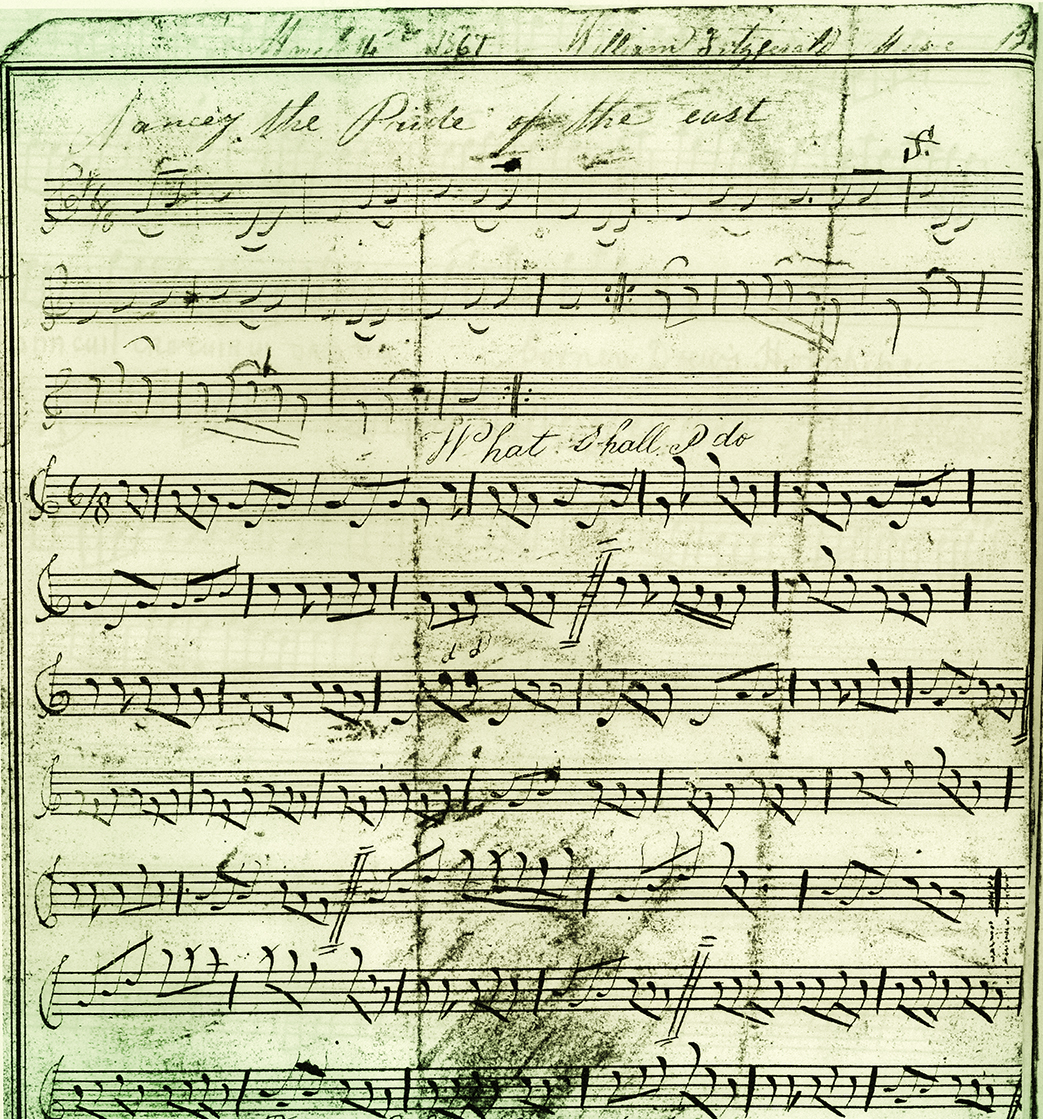
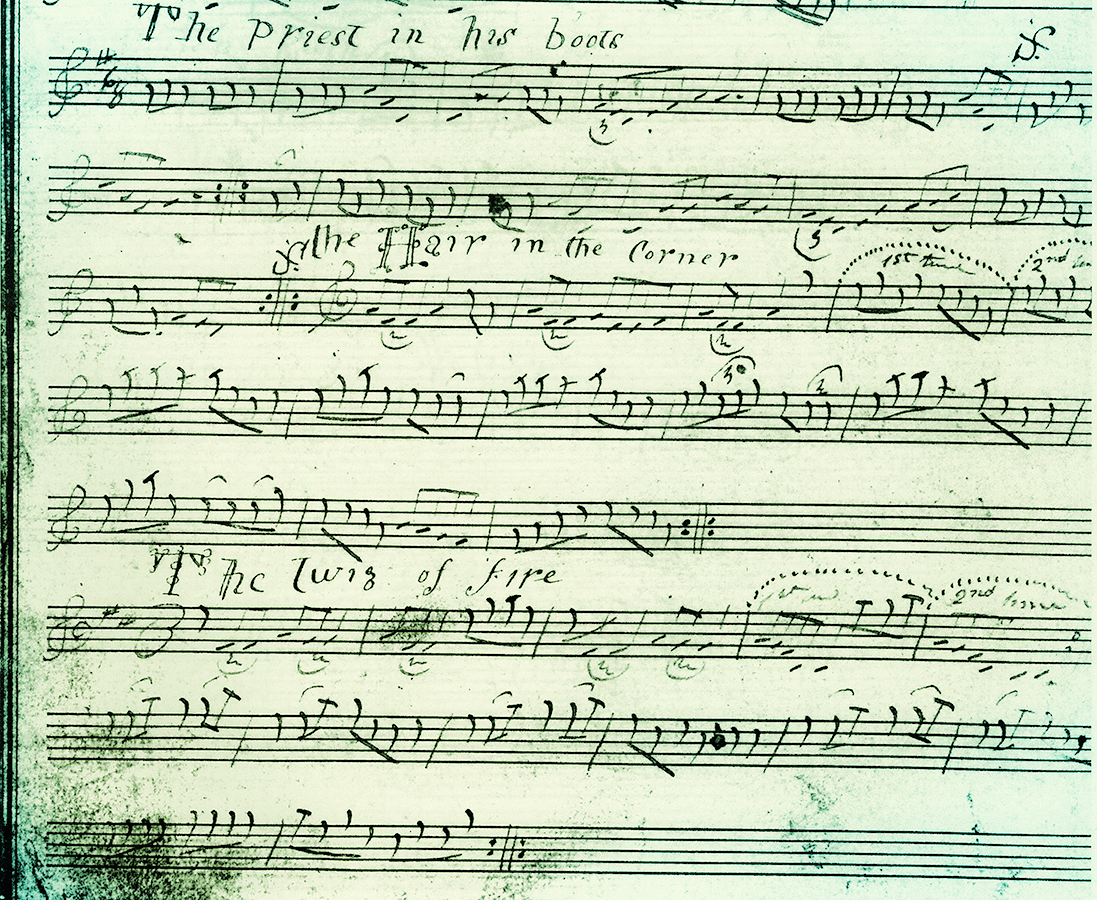
William Fitzgerald lived in the mid-19th century in the area around Ballydesmond–possibly Glenreagh or Lacka, but information on him is spotty. It seems he was a student of Corney Drew and became a travelling fiddle teacher himself. In 1866 he produced a manuscript of his repertoire which survives to this day. It was printed, in part, in Dan Herlihy’s Sliabh Luachra Music Masters, Vol. 2 (though misattributed to Corney Drew.) The Fitzgerald manuscript represents the repertoire and style of Sliabh Luachra before the craze for polkas and slides as we know them really took hold. It contains a great many waltzes, jigs, and reels, a few English tunes, and a number of polkas in a more “continental” style than what we would now identify as a Sliabh Luachra polka.

It has been said that Pádraig O’Keeffe “studied the music of Fitzgerald,” and by this we might take it to mean that he owned a copy of this manuscript and drew some tunes and settings from it.

Not long after the creation of the manuscript, it seems that Fitzgerald emigrated to America  (perhaps coincidentally, around the same time that Corney Drew himself emigrated) and what happened to him after that is not known.

The standard known as Fitzgerald’s Hornpipe (collected by Breandán Breathnach for the second volume of Ceol Rince na hÉireann from Molly Myers Murphy in 1967) is probably named after him.

Learned from: Corney Drew